The Rise and Fall of Sparta’s Military Power
A City-State of Unyielding Resolve
Sparta, a city-state in ancient Greece, was renowned for its unwavering commitment to military prowess. For centuries, the Spartans cultivated a culture of unrelenting discipline, training, and sacrifice, which enabled them to maintain an unparalleled level of military power. The city’s storied history is a testament to the enduring legacy of its warrior culture, which has captivated the imagination of historians and scholars for centuries.
The Golden Age of Sparta
A Military Machine of Unprecedented Efficiency
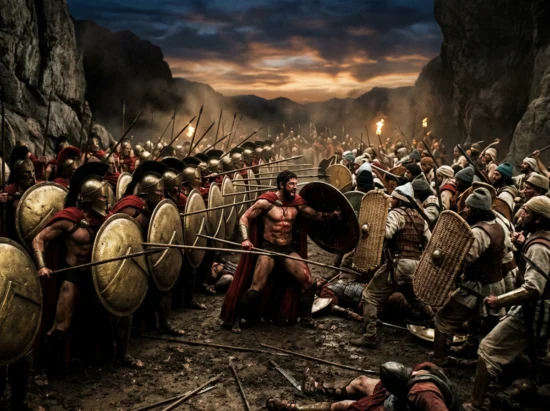
During the 5th and 4th centuries BCE, Sparta reached the pinnacle of its military power, with its highly trained and well-equipped phalanx formation becoming the envy of its contemporaries. The Spartans’ mastery of tactics, their unwavering resolve, and their logistical prowess made them nearly unbeatable on the battlefield. The Spartans’ legendary discipline and organization allowed them to achieve victories that seemed impossible to others, including the crushing defeat of the Athenian army at the Battle of Mantinea.
The Spartans’ military machine was a product of their unique social and cultural landscape. The city’s rigid social hierarchy, with its emphasis on birthright and merit, created an environment in which the very best warriors were selected and trained from a young age. The famous agoge training system, which emphasized rigorous physical conditioning, martial arts, and tactical training, produced some of the most formidable fighters in ancient Greece.
A Culture of Sacrifice and Discipline
The Spartans’ dedication to their military calling was not limited to their warriors alone. The entire city was mobilized to support the war effort, with every citizen expected to contribute to the war machine in some way. This collective sense of purpose and duty created a sense of unity and cohesion that was unmatched in ancient Greece. The Spartans’ unwavering commitment to their ideals and their willingness to make the ultimate sacrifice for their city and their comrades was a key factor in their military success.
The Decline of Sparta’s Military Power
A Series of Catastrophic Defeats
Despite their impressive military record, the Spartans’ power began to wane in the 4th century BCE, with a series of crushing defeats that would ultimately prove to be the undoing of their military machine. The Battle of Leuctra, fought in 371 BCE, was a particularly devastating blow, as the Theban army, led by Epaminondas, emerged victorious against the Spartans. This defeat marked the beginning of a long and painful decline, as the Spartans struggled to come to terms with their loss of influence and prestige.
The Theban victory at Leuctra was a result of a combination of factors, including the innovative tactics employed by Epaminondas and the superior training and discipline of the Theban army. The Thebans’ use of the “oblique order” formation, which involved deploying their troops at an angle to the enemy, allowed them to outmaneuver the Spartans and exploit their weaknesses. This tactical innovation, coupled with the Thebans’ superior training and organization, proved to be a decisive factor in the outcome of the battle.
The Aftermath of Defeat
The loss at Leuctra was a bitter pill for the Spartans to swallow, and it marked the beginning of a long period of decline and instability. The city’s traditional social and cultural structures, which had once been the bedrock of its military power, began to show signs of strain. The Spartans’ legendary discipline and organization, which had once made them nearly unbeatable on the battlefield, began to break down, as the city struggled to come to terms with its loss of influence and prestige.
The End of an Era
A Legacy of Military Excellence
The fall of Sparta’s military power was a gradual process, marked by a series of catastrophic defeats and a steady decline in the city’s influence and prestige. Despite this, the Spartans’ legacy as one of the greatest military powers in ancient Greece remains unchallenged. Their unique culture of discipline and sacrifice, which emphasized the importance of training, organization, and tactical innovation, created a military machine that was unmatched in its time.
The Spartans’ military power may have been broken, but their legacy lives on, inspiring generations of warriors and tacticians to this day. Their emphasis on discipline, training, and organization remains a guiding principle for military organizations around the world, and their innovative tactics continue to influence the development of modern warfare.
Conclusion
The fall of Sparta’s military power was a complex and multifaceted process, marked by a series of catastrophic defeats and a steady decline in the city’s influence and prestige. Despite this, the Spartans’ legacy as one of the greatest military powers in ancient Greece remains unchallenged. Their unique culture of discipline and sacrifice, which emphasized the importance of training, organization, and tactical innovation, created a military machine that was unmatched in its time.
FAQ
What was the primary cause of the decline of Sparta’s military power?
The primary cause of the decline of Sparta’s military power was a combination of factors, including the loss of key battles, the decline of the city’s traditional social and cultural structures, and the emergence of new military powers in ancient Greece. The loss of the Battle of Leuctra, fought in 371 BCE, was a particularly devastating blow, as the Theban army, led by Epaminondas, emerged victorious against the Spartans.
What was the significance of the agoge training system in Sparta?
The agoge training system, which emphasized rigorous physical conditioning, martial arts, and tactical training, was a key factor in the Spartans’ military success. The system, which was designed to produce the very best warriors, allowed the Spartans to cultivate a culture of discipline and sacrifice that was unmatched in ancient Greece.
How did the Thebans employ innovative tactics at the Battle of Leuctra?
The Thebans employed the “oblique order” formation, which involved deploying their troops at an angle to the enemy, to outmaneuver the Spartans and exploit their weaknesses. This innovative tactic, coupled with the Thebans’ superior training and organization, proved to be a decisive factor in the outcome of the battle.
What is the legacy of the Spartans’ military power in modern times?
The Spartans’ legacy as one of the greatest military powers in ancient Greece remains unchallenged. Their unique culture of discipline and sacrifice, which emphasized the importance of training, organization, and tactical innovation, created a military machine that was unmatched in its time. The Spartans’ emphasis on discipline, training, and organization remains a guiding principle for military organizations around the world, and their innovative tactics continue to influence the development of modern warfare.