Roman Legion vs Greek Phalanx
The ancient world was a hotbed of military innovation, with various civilizations constantly pushing the boundaries of warfare. Two of the most iconic and influential military formations of the time were the Roman Legion and the Greek Phalanx. While both were formidable in their own right, they had distinct differences in their composition, tactics, and overall impact on the battlefield.
The Roman Legion: A Well-Oiled Machine
The Roman Legion was the backbone of the Roman army, and its organization was a key factor in Rome’s military success. A legion typically consisted of 3,000 to 6,000 soldiers, divided into ten cohorts of 300 men each. Each cohort was further divided into three maniples of 100 men, with the most experienced and skilled soldiers at the front.
The Roman Legion was a highly disciplined and cohesive unit, with a strong emphasis on individual training and teamwork. Legionnaires were expected to be proficient in a variety of skills, including hand-to-hand combat, archery, and siege warfare. The Roman army’s use of the testudo (tortoise) formation, where legionnaires locked shields to create a protective wall, was a testament to their discipline and coordination.
The Greek Phalanx: A Wall of Spears
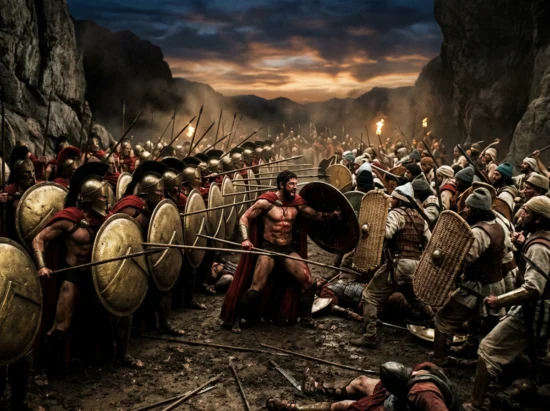
The Greek Phalanx was a dense formation of heavily armored soldiers, typically 8 to 12 men deep, armed with long spears (called doru) and a smaller shield (hoplon). The Phalanx was an effective formation for breaking enemy lines and protecting the flanks of the army.
The Greek Phalanx relied on the length of its spears to create a wall of points, making it difficult for enemies to approach. The Phalanx was also an excellent formation for absorbing cavalry charges, as the long spears made it difficult for horsemen to penetrate the formation. The Greek army’s use of the Phalanx allowed them to hold their ground against more numerous enemies, and it was a key factor in their victories against the Persians and other opponents.
Tactical Differences
The Roman Legion and the Greek Phalanx employed different tactics to achieve their objectives. The Roman Legion was designed for flexibility and adaptability, with a strong emphasis on individual initiative and problem-solving. Legionnaires were trained to respond to changing circumstances on the battlefield, and they were expected to be able to adapt their tactics to suit the situation.
The Greek Phalanx, on the other hand, relied on its sheer density and the length of its spears to create a wall of points that was difficult for enemies to penetrate. The Phalanx was a static formation, with the soldiers moving as a unit to advance or retreat. The Greek army’s use of the Phalanx was often a slow and deliberate process, with the soldiers advancing in a steady, unbroken line.
Infantry vs Cavalry
One of the key differences between the Roman Legion and the Greek Phalanx was their approach to cavalry. The Roman Legion was designed to be highly mobile and adaptable, with a strong emphasis on cavalry charges and rapid redeployment of troops. Legionnaires were trained to respond quickly to changing circumstances on the battlefield, and they were expected to be able to adapt their tactics to suit the situation.
The Greek Phalanx, on the other hand, relied on its dense formation to protect against cavalry charges. The Phalanx was designed to absorb the impact of enemy cavalry, and the long spears made it difficult for horsemen to penetrate the formation. The Greek army’s use of the Phalanx allowed them to hold their ground against more numerous enemies, and it was a key factor in their victories against the Persians and other opponents.
The Impact of Technology
The development of new technologies had a significant impact on the effectiveness of both the Roman Legion and the Greek Phalanx. The introduction of the pilum (a heavy, barbed javelin) and the gladius (a short, pointed sword) gave the Roman Legion a significant advantage in close combat. The use of these technologies allowed the Roman Legion to break enemy lines and exploit weaknesses in the enemy’s formation.
The Greek Phalanx, on the other hand, relied on its dense formation and the length of its spears to create a wall of points that was difficult for enemies to penetrate. The Phalanx was a static formation, with the soldiers moving as a unit to advance or retreat. The Greek army’s use of the Phalanx was often a slow and deliberate process, with the soldiers advancing in a steady, unbroken line.
Conclusion
The Roman Legion and the Greek Phalanx were two of the most influential and iconic military formations of the ancient world. While both were formidable in their own right, they had distinct differences in their composition, tactics, and overall impact on the battlefield. The Roman Legion was a highly disciplined and cohesive unit, with a strong emphasis on individual training and teamwork. The Greek Phalanx, on the other hand, relied on its dense formation and the length of its spears to create a wall of points that was difficult for enemies to penetrate.
The Roman Legion’s flexibility and adaptability allowed it to respond quickly to changing circumstances on the battlefield, and its use of the testudo formation made it difficult for enemies to penetrate. The Greek Phalanx, on the other hand, was a static formation that relied on its density and the length of its spears to create a wall of points that was difficult for enemies to penetrate.
FAQ
Q: What was the primary function of the Roman Legion?
The Roman Legion was a highly disciplined and cohesive unit, with a strong emphasis on individual training and teamwork. Legionnaires were expected to be proficient in a variety of skills, including hand-to-hand combat, archery, and siege warfare.
Q: How did the Greek Phalanx protect against cavalry charges?
The Greek Phalanx relied on its dense formation and the length of its spears to create a wall of points that was difficult for enemies to penetrate. The Phalanx was designed to absorb the impact of enemy cavalry, and the long spears made it difficult for horsemen to penetrate the formation.
Q: What was the significance of the pilum and the gladius in the Roman Legion?
The introduction of the pilum and the gladius gave the Roman Legion a significant advantage in close combat. The use of these technologies allowed the Roman Legion to break enemy lines and exploit weaknesses in the enemy’s formation.
Q: How did the Greek Phalanx adapt to different situations on the battlefield?
The Greek Phalanx was a static formation, with the soldiers moving as a unit to advance or retreat. The Greek army’s use of the Phalanx was often a slow and deliberate process, with the soldiers advancing in a steady, unbroken line.