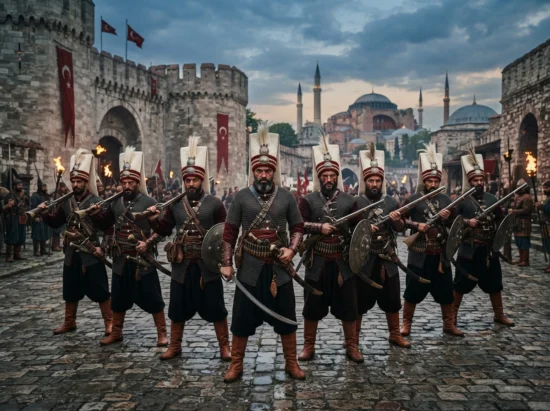
The Rise of Medieval Warfare: A Transformative Era in Human History
A Brief Introduction to Medieval Warfare
Medieval warfare, spanning from the 5th to the 15th century, marked a pivotal period in human history. It was a time of great change, as the ways of war evolved in response to technological advancements, shifting societal structures, and the emergence of complex nation-states. This era saw the rise of chivalry, the development of armor, and the introduction of firearms, all of which significantly impacted the conduct of warfare and the lives of those involved.
The Early Middle Ages: A Period of Fragmentation and Raids
The early Middle Ages, roughly spanning the 5th to the 10th centuries, were marked by a period of fragmentation and raids. The collapse of the Western Roman Empire in 476 CE led to a power vacuum that was filled by various barbarian tribes. These tribes, such as the Visigoths, Vandals, and Ostrogoths, launched frequent raids against the remaining Roman territories. The absence of a unified authority allowed these tribes to establish their own kingdoms and engage in petty wars.
During this period, warfare was often a matter of personal honor and revenge. The concept of chivalry, which emphasized honor, loyalty, and courtesy, began to take shape. Knights, the mounted warriors who became the dominant force in medieval warfare, emerged as a distinct class of warriors. Their code of conduct, the “chivalric code,” emphasized the importance of martial prowess, loyalty, and protection of the weak.
The High Middle Ages: A Period of Consolidation and Crusades
The High Middle Ages, spanning the 11th to the 13th centuries, saw a period of consolidation and the emergence of powerful nation-states. The rise of the Holy Roman Empire, the emergence of the Kingdom of England, and the growth of the Byzantine Empire marked significant developments in medieval warfare. The introduction of the feudal system, which tied lords to vassals and peasants to land, created a complex web of obligations and dependencies that shaped the conduct of warfare.
This period also saw the rise of the Crusades, a series of military campaigns aimed at reclaiming the Holy Land from Muslim rule. The Crusades, which lasted from 1095 to 1291, brought together warriors from across Europe, creating a shared sense of purpose and fostering the development of new tactics and technologies. The introduction of the crossbow, a powerful and accurate ranged weapon, and the development of castle architecture, which emphasized defense and fortification, marked significant advancements in medieval warfare.
The Late Middle Ages: A Period of Decline and the Emergence of Firearms
The Late Middle Ages, spanning the 14th to the 15th centuries, saw a period of decline and the emergence of new technologies. The Black Death, which ravaged Europe in the 14th century, led to significant social and economic changes, including a decline in the feudal system and the emergence of a new class of merchants and artisans. The introduction of the longbow, a powerful and accurate ranged weapon, and the development of artillery, such as the trebuchet and the catapult, marked significant advancements in medieval warfare.
The late Middle Ages also saw the emergence of firearms, which would go on to revolutionize warfare in the centuries to come. The first firearms, such as the hand cannon and the arquebus, were cumbersome and unreliable, but they marked the beginning of a new era in warfare. The development of gunpowder, which would be used to propel these early firearms, marked a significant turning point in the history of warfare.
The Impact of Medieval Warfare on Society
Medieval warfare had a profound impact on society, shaping the lives of those involved and influencing the development of complex nation-states. The rise of chivalry, the development of armor, and the introduction of firearms all contributed to a culture of honor, loyalty, and martial prowess. The conduct of warfare also influenced the development of social and economic structures, including the feudal system and the emergence of a new class of merchants and artisans.
Medieval warfare also saw the emergence of a distinct class of warriors, the knights, who became the dominant force in medieval society. The code of conduct known as the “chivalric code” emphasized the importance of martial prowess, loyalty, and protection of the weak. The conduct of warfare also influenced the development of castle architecture, which emphasized defense and fortification.
Conclusion
Medieval warfare marked a transformative era in human history, as the ways of war evolved in response to technological advancements, shifting societal structures, and the emergence of complex nation-states. The rise of chivalry, the development of armor, and the introduction of firearms all contributed to a culture of honor, loyalty, and martial prowess. The conduct of warfare also influenced the development of social and economic structures, including the feudal system and the emergence of a new class of merchants and artisans.
FAQs about Medieval Warfare
Q: What was the significance of the Crusades in medieval warfare?
A: The Crusades, a series of military campaigns aimed at reclaiming the Holy Land from Muslim rule, brought together warriors from across Europe, creating a shared sense of purpose and fostering the development of new tactics and technologies. The introduction of the crossbow, a powerful and accurate ranged weapon, and the development of castle architecture, which emphasized defense and fortification, marked significant advancements in medieval warfare.
Q: What was the impact of the Black Death on medieval warfare?
A: The Black Death, which ravaged Europe in the 14th century, led to significant social and economic changes, including a decline in the feudal system and the emergence of a new class of merchants and artisans. The introduction of the longbow, a powerful and accurate ranged weapon, and the development of artillery, such as the trebuchet and the catapult, marked significant advancements in medieval warfare.
Q: What was the significance of the introduction of firearms in medieval warfare?
A: The introduction of firearms, such as the hand cannon and the arquebus, marked a significant turning point in the history of warfare. The development of gunpowder, which would be used to propel these early firearms, marked a significant advancement in the technology of warfare.
Q: What was the impact of medieval warfare on the development of complex nation-states?
A: Medieval warfare had a profound impact on the development of complex nation-states, shaping the lives of those involved and influencing the emergence of new social and economic structures. The rise of chivalry, the development of armor, and the introduction of firearms all contributed to a culture of honor, loyalty, and martial prowess.