Viking Battle Tactics Explained
The Ancient Art of War
The Vikings were a fierce and skilled warrior culture that roamed the lands of Europe during the Viking Age, which lasted from the late 8th century to the mid-11th century. Their battles were legendary for their ferocity and skill, and their tactics have been studied by historians and military strategists for centuries. In this article, we will delve into the Viking battle tactics, exploring the strategies and techniques they employed to gain victory in battle.
Organization and Leadership
The Vikings were organized into small, mobile units known as “longships.” These units were typically led by a chieftain or a jarl, who would make key decisions on the battlefield. The Vikings believed in a decentralized command structure, where local leaders had a great deal of autonomy to make decisions on the battlefield. This allowed for quick adaptation to changing circumstances and a more fluid, dynamic approach to combat.
- Decentralized command structure allowed for quick decision-making and adaptation to changing circumstances.
- Local leaders had a great deal of autonomy to make decisions on the battlefield.
- This approach allowed the Vikings to respond quickly to changes in the battle.
Shield Wall Tactics
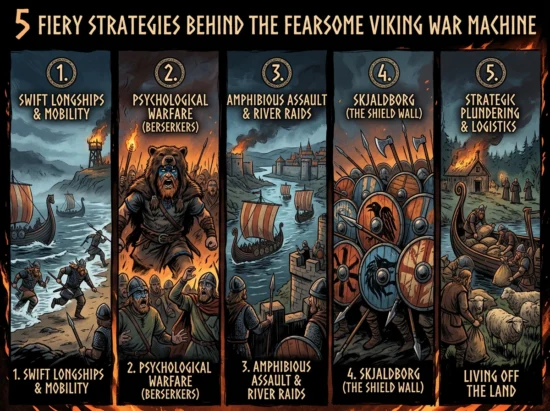
The Vikings were masters of the shield wall, a tactic where they would form a tight, impenetrable wall of shields to protect themselves from enemy attacks. This tactic allowed them to absorb heavy blows and then counterattack with devastating effect. The shield wall was a key component of Viking battle tactics, and it was often used to great effect in battle.
When forming the shield wall, the Vikings would arrange themselves in a tight, compact formation, with their shields overlapping to create a solid wall of protection. This wall was then held firm, with the Vikings standing shoulder to shoulder, their shields bristling with the edges of their comrades’ shields. This created a solid, impenetrable wall that enemy warriors could not breach.
The Vikings would then advance on the enemy, their shields held high, creating a wall of protection that allowed them to advance safely. The shield wall was a key component of Viking battle tactics, and it was often used to great effect in battle.
Longships and Naval Tactics
The Vikings were skilled naval warriors, and their longships played a key role in their battles. The longships were fast and agile, allowing the Vikings to quickly move around the battlefield and launch surprise attacks on their enemies. The Vikings would often use their longships to launch surprise attacks on enemy positions, then quickly move away to avoid counterattack.
The Vikings were also skilled at using their longships to blockade enemy ports and rivers. By blocking these waterways, the Vikings could prevent enemy forces from receiving supplies and reinforcements, starving them of resources and weakening their position on the battlefield.
The Importance of Speed and Mobility
The Vikings were a mobile and fast-moving force, able to quickly move around the battlefield and launch surprise attacks on their enemies. Their longships allowed them to quickly move around the battlefield, and their light armor and flexible tactics allowed them to adapt quickly to changing circumstances.
The Vikings were skilled at using their speed and mobility to their advantage. They would often launch surprise attacks on enemy positions, then quickly move away to avoid counterattack. This allowed them to maintain a strategic advantage and keep their enemies off balance.
Psychological Warfare and Propaganda
The Vikings were skilled at using psychological warfare and propaganda to their advantage. They would often use their warriors to spread fear and terror among their enemies, creating a psychological advantage that would weaken their opponents’ resolve and morale.
The Vikings would also use their sagas, or epic poems, to spread propaganda and create a sense of national identity and purpose. The sagas would often tell of the Vikings’ great deeds and exploits, creating a sense of pride and patriotism among the Viking people.
Conclusion
The Viking battle tactics were legendary for their ferocity and skill. The Vikings were a mobile and fast-moving force, able to quickly move around the battlefield and launch surprise attacks on their enemies. Their shield wall tactics allowed them to absorb heavy blows and then counterattack with devastating effect. The Vikings were skilled at using their speed and mobility to their advantage, and they were able to use psychological warfare and propaganda to create a psychological advantage on the battlefield.
FAQ
Q: What was the role of the shield wall in Viking battle tactics?
The shield wall was a key component of Viking battle tactics, allowing the Vikings to absorb heavy blows and then counterattack with devastating effect. The shield wall was formed by arranging the Vikings in a tight, compact formation, with their shields overlapping to create a solid wall of protection.
Q: How did the Vikings use their longships in battle?
The Vikings used their longships to launch surprise attacks on enemy positions, then quickly move away to avoid counterattack. They also used their longships to blockade enemy ports and rivers, preventing enemy forces from receiving supplies and reinforcements.
Q: What was the importance of speed and mobility in Viking battle tactics?
The Vikings were a mobile and fast-moving force, able to quickly move around the battlefield and launch surprise attacks on their enemies. Their speed and mobility allowed them to adapt quickly to changing circumstances and maintain a strategic advantage on the battlefield.
Q: How did the Vikings use psychological warfare and propaganda in battle?
The Vikings used their warriors to spread fear and terror among their enemies, creating a psychological advantage that would weaken their opponents’ resolve and morale. They also used their sagas, or epic poems, to spread propaganda and create a sense of national identity and purpose among the Viking people.
Conclusion
The Viking battle tactics were legendary for their ferocity and skill. The Vikings were a mobile and fast-moving force, able to quickly move around the battlefield and launch surprise attacks on their enemies. Their shield wall tactics allowed them to absorb heavy blows and then counterattack with devastating effect. The Vikings were skilled at using their speed and mobility to their advantage, and they were able to use psychological warfare and propaganda to create a psychological advantage on the battlefield.